
Conflict resolution is a safety tool, not a soft skill
Why frontline organisations cannot afford to treat escalation, abuse, and pressure as “part of the job” in 2026 For many organisations in public-facing, safety-critical…
The UK’s finest learning and development experience
For many organisations in public-facing, safety-critical sectors, conflict is still framed as a behavioural or interpersonal issue. Something for HR to address after the fact, or for managers to deal with informally when tensions spill over.
That framing is now dangerously out of date.
In 2026, conflict resolution is a safety control, a safeguarding measure, and a retention strategy. Treating it as anything less exposes your people to psychological harm and your organisation to avoidable cost.
This matters acutely for highways, rail, utilities, telecoms, local authorities, enforcement, and infrastructure delivery more broadly. Anywhere your people interact with the public under pressure, conflict is no longer an exception. It is a working condition.
The scale of frontline abuse is now well evidenced.
A UK highways sector survey found that 60 percent of road workers had witnessed or experienced abuse in a 12-month period, with many reporting repeated incidents rather than one-off.
Among those affected, nearly a quarter reported 10 or more incidents in a year, reinforcing that this is not occasional poor behaviour, but sustained exposure.
Independent reporting has gone further. ITV News found that nearly one in four road workers said abuse had made them consider leaving their job, and that for many, hostile behaviour had become “part of the job” rather than an anomaly.
And this pattern is not confined to roads.
Train staff, station teams, rail engineers, and maintenance crews face similar public frustration and aggression, particularly during disruption, delays, or enforcement activity. Utilities engineers entering homes and streets, telecoms technicians, water workers, and local authority officers report the same dynamic: anger directed at the nearest uniform, logo, or van.
A GMB survey reported that more than one in three UK water workers had experienced verbal abuse, with some facing threats or physical assault.
This is not a sector-specific issue. It is a public-facing risk pattern.
Most organisations are rightly rigorous when it comes to physical risk. RAMS, lone-working protocols, plant safety, and environmental controls are well embedded.
Repeated exposure to aggression creates a chronic stress response. Even when incidents do not escalate physically, the anticipation of confrontation drives hyper-vigilance, emotional suppression, and cognitive load. Over time, this reduces attention, increases error likelihood, and compromises judgement, particularly in complex or hazardous environments.
Psychological risk is often treated differently.
Conflict resolution training works as harm reduction because it intervenes early. It gives people tools to regulate themselves under provocation, disengage safely, set boundaries, and avoid escalation before it becomes an incident.
This aligns directly with safeguarding and wellbeing strategies. It reduces exposure at source rather than relying on absence management, post-incident support, or reactive interventions later.
You cannot meaningfully claim to protect people if you leave them unskilled in handling the most predictable psychological hazard in their role.
The retention implications are already visible.
When one in four frontline workers is thinking about leaving due to abuse, the risk is not theoretical. It is active.
What many organisations miss is the time lag. People rarely leave immediately. They disengage first. They withdraw discretionary effort. They avoid visibility. They “silently quit” long before a resignation lands on a desk.
By the time notice is handed in, the organisation has often been absorbing the cost for months through reduced performance, lower morale, and increased friction elsewhere.
Replacing experienced frontline staff is expensive. In rail, highways, utilities, and infrastructure delivery, the loss of competence, situational awareness, and local knowledge carries safety and delivery risk that no induction programme can instantly replace.
Conflict resolution training slows this attrition curve because it restores a sense of control. People stay not because conflict disappears, but because they feel equipped rather than exposed.
A common mistake is to treat conflict resolution as a narrow communication skill.
In reality, it is a self-leadership capability.
Before someone can de-escalate another person, they must regulate themselves. That means managing physiological threat responses, maintaining clarity under pressure, and choosing behaviour deliberately rather than reactively.
These skills underpin effective leadership, decision-making, and professional authority in any high-stakes role. This is why conflict capability transfers directly into wider leadership and management development. The same skills that keep someone safe in a volatile interaction also stabilise performance during incidents, disruption, change, and uncertainty.
Organisations that recognise this stop siloing conflict training as a behavioural add-on and start embedding it within safety and leadership capability frameworks.
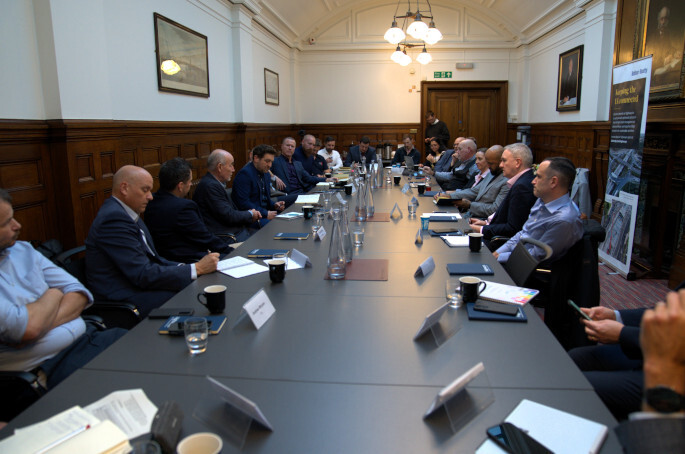
Minerva Elite Performance is a key partner in the End Road Worker Abuse campaign, and the only training organisation involved at that level.
That position reflects lived understanding, not theory.
Staying calm under pressure is not a personality trait. It is a trained capability. Our programmes are informed by frontline and military experience, where emotional regulation, situational awareness, and controlled response are operational necessities.
We do not teach passivity. We teach authority without escalation, self-control under provocation, and safe disengagement when required.
Conflict will not disappear. Public pressure is unlikely to ease. Expectations on frontline staff will continue to rise.
The choice for organisations is whether conflict remains an unaddressed cost absorbed by individuals, or a predictable risk mitigated through skill.
In 2026, conflict resolution belongs alongside safety systems, safeguarding strategies, and leadership development. Not as a tick-box course, but as a core capability that protects people, stabilises performance, and reduces costly attrition.
Ignoring it does not make it go away. It simply shifts the burden onto your workforce until they decide they have had enough.
If you are responsible for safety, wellbeing, or capability in a public-facing organisation, now is the time to reassess how prepared your people really are.
Start a conversation about better protecting your people:
📞 Call us today: 01432 678123
📧 Email: admissions@mep-ltd.uk

Why frontline organisations cannot afford to treat escalation, abuse, and pressure as “part of the job” in 2026 For many organisations in public-facing, safety-critical…

Why looking back is essential to sustainable high performance Hey, I’m Craig – Head of Learning and Quality Assurance at MEP. Welcome to 2026! In high-performing…

Leaving the military? Don’t leave money on the table. If you’re planning your transition from the Armed Forces to civilian life, ELCAS funding is one of the most powerful…